
Faceless Content Ideas with Privacy-First Shot Plans
Faceless Content Ideas with Privacy-First Shot Plans explains a five-part idea check and adaptable content directions for clearer production decisions.
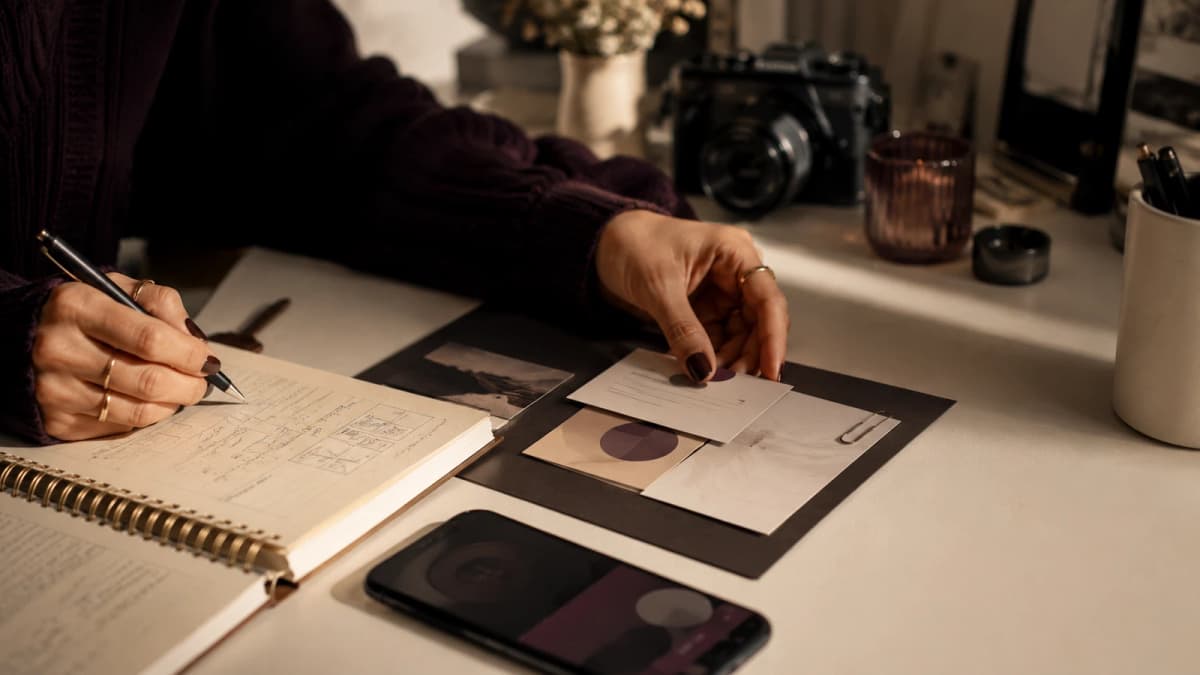
A useful search result should do more than supply prompts. It should help the reader decide what to show, why the audience should care and how to finish the piece with the resources actually available. That is the standard used here for a creator who wants to publish without making their face the centre of the content.
The useful question is which audience tension the piece addresses, what the viewer will see as evidence and whether the production plan fits privacy, anonymity, limited on-camera confidence and the need for visual variety.
Quick answer
A working approach to faceless content ideas starts with one audience tension, assigns the content one job, chooses a visible form of proof, and defines the opening frame before filming. Build around privacy, anonymity, limited on-camera confidence and the need for visual variety; then adapt the format without changing the underlying point.
A useful content idea has five connected parts
- Audience tension: the question, desire, objection or friction the content addresses.
- Content job: teach, demonstrate, compare, reassure, reveal process or invite action.
- Opening frame: the first visible moment, written together with the hook.
- Proof: hands, objects, screens, environments, voiceover, text or process footage.
- Production boundary: the time, access, confidence and editing capacity available for this piece.
When the plan for Hands at work is missing one of these parts, a prompt may still sound clever but remain difficult to film. The solution is not always a bigger idea. Often it is a narrower claim and a more deliberate first shot.
6 shoot-ready directions to adapt
1. Hands at work
Angle: Use hands to show the meaningful action while text explains why it matters.
Suggested sequence: Top-down hook; hands begin; detail; finished state.
Proof to include: The work changes visibly on screen.
Natural next step: Invite the viewer to save the process.
2. Object as narrator
Angle: Let one object carry a story through changing locations or states.
Suggested sequence: Object close-up; context; use; result.
Proof to include: The object links every scene.
Natural next step: Ask what object represents the viewer’s routine.
3. Screen plus real-world proof
Angle: Pair a screen recording with a physical result or action.
Suggested sequence: Screen step; real action; comparison; outcome.
Proof to include: The digital action produces a visible result.
Natural next step: Point to the full workflow.
4. POV routine
Angle: Film from the creator’s point of view so the audience experiences the sequence directly.
Suggested sequence: Arrival; selection; action; completion.
Proof to include: The sequence is understandable without a face.
Natural next step: Invite viewers to try the routine.
Turn one direction into a repeatable series
For Hands at work, choose a stable element that the audience can recognise: a title card, opening question, camera position, visual object or decision framework. Change the example while keeping the promise. A series is useful when the format reduces planning time without forcing every post to look identical. A simple series matrix can use four roles:
- Hands And Process: publish one recurring format that fulfils this role.
- Object-Led Stories: publish one recurring format that fulfils this role.
- Screen Demonstrations: publish one recurring format that fulfils this role.
- Voiceover Perspective: publish one recurring format that fulfils this role.
In Screen plus real-world proof, do not schedule all four roles simply to fill a calendar. Use the roles to diagnose what the account currently lacks. If the last several posts all teach, the next piece may need proof, personality or a clearer invitation.
Adapt the concept to the creator mode
- Talking to camera: keep the spoken point short and let the visual proof interrupt the monologue.
- Voiceover: record the scenes first, then write only the words the images cannot communicate.
- Hands-only or faceless: use objects, screens, text and environment as the visual subject.
- Low-production: reduce the scene count to hook, proof and next step.
- Brand collaboration: add mandatory claims, disclosure, usage requirements and an approval route before filming.
Common reasons good ideas remain unfilmed
- The idea tries to make several claims at once.
- The hook and opening image communicate different messages.
- The creator has no access to the proof the concept requires.
- The format was chosen because it is trending, not because it suits the point.
- The ending asks for engagement without giving the viewer a relevant action.
For Hands at work, remove scenes until every remaining shot has a job. A concise piece with clear evidence is usually more convincing than an ambitious sequence filled with decorative footage.
A practical pre-shoot check
Before recording, answer these questions in one sentence each:
- Who is this for right now?
- What should the viewer understand, feel or decide?
- What is the first frame?
- What evidence will appear on screen?
- What can be removed if time runs short?
- What is the most natural next action?
In POV routine, a smaller number of well-resolved concepts usually creates more usable work than a large bank of prompts that still need to be interpreted at the camera.
Frequently asked questions
How many ideas should I plan at once?
For Screen plus real-world proof, plan only as many as you can resolve into real scenes. For many solo creators, three to six complete concepts are more useful than dozens of prompts because filming decisions have already been made.
Should every idea target the primary keyword?
In Faceless Content Ideas with Privacy-First Shot Plans, no. The keyword defines the page topic, not a phrase that must be repeated in every paragraph or post. Use natural language, related questions and specific examples. The content should read as an answer, not as a keyword inventory.
Can the same concept be used on different platforms?
Yes, but the execution should change. Preserve the audience tension and proof; then adapt the opening, pacing, dimensions, caption and CTA to the platform.
Next step
In Screen plus real-world proof, an Anomaly Box brief writes the opening, scenes, proof, caption, and claim limit in one place. See the store if a generic template still leaves those decisions open.
Related guides
Continue with the most useful next step for your format, workflow, or production constraint.
- Parenting Content Ideas with Privacy and Real-Life UtilityContent Ideas
- UGC Content Ideas Brands Can Approve and Creators Can ShootContent Ideas
- Educational Content Ideas That Make Expertise Easy to FollowContent Ideas
- How to Turn One Idea into a Shoot-Ready Content BriefResources
- Instagram Reels Ideas with Hooks, Scenes and Shot PlansReels